Your Choice of Product
A small gypsum board production line covers roughly 2 to 4 million m² per year, and it is the size most first-time investors start with. At this scale the equipment is simpler, the building is shorter, and the capital requirement is a fraction of a national-scale line. What does not change is the standard the board has to meet, or the fact that the dryer — not the forming section — decides how much building you need.
DCI's standard plasterboard production line models run from 2 to 20 million m² per year in seven steps, and capacities up to 50 million m²/year are built as configurations rather than catalogue models. For a small plant, only the first two steps matter.
Model | Annual capacity | Line speed | Dryer decks | Heat demand |
2 million m²/year | 2,000,000 m² | 4 m/min | 4 | 120 kcal |
4 million m²/year | 4,000,000 m² | 8 m/min | 6 | 240 kcal |
The 2 million sqm gypsum board production line is the entry model and the one most projects start from. Both it and the 4 million model run the same board specification: thickness 7–20 mm, width 1200 or 1220 mm and length 2400–3600 mm, all adjustable. Moving from one step to the next doubles line speed and adds two dryer decks to handle the extra wet board. A mini gypsum board plant built on the 2 million model therefore shares its component design with the larger units, which matters for spare parts.
Anything between two steps is quoted as a configuration rather than as a catalogue model. If your target falls between 4 and 6 million m²/year, the conversation is about which platform to stretch, not about which model to pick from a list.
A gypsum board making machine is never a single unit — a complete line runs from raw material reception to packed board, and each section has to be sized for the target speed.
Section | Function at small capacity |
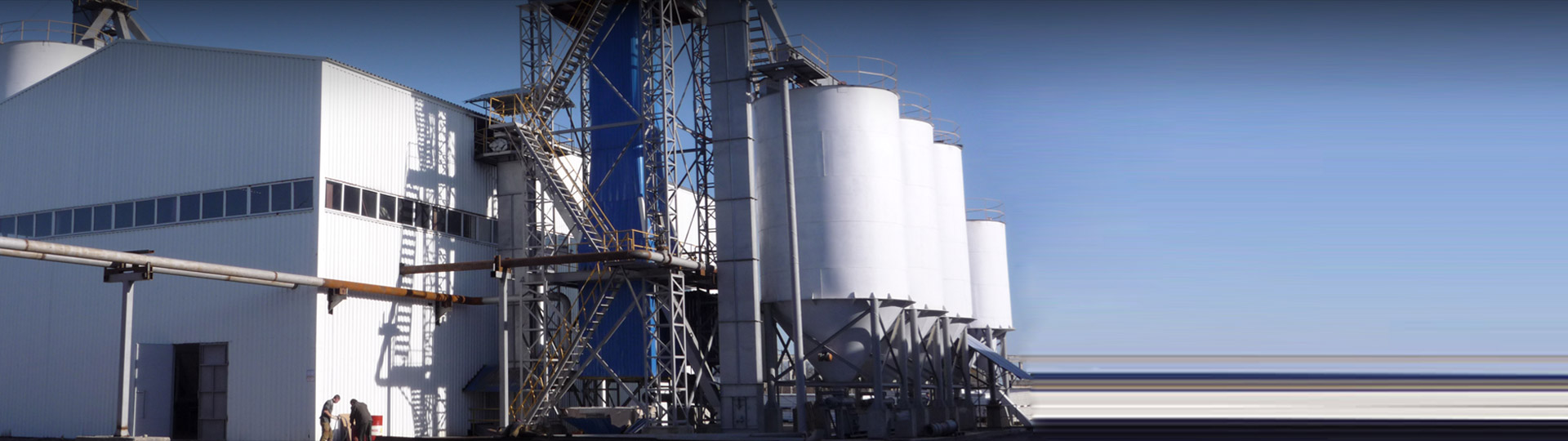
Raw material handling | Stucco silo and metering; additives dosed into the mixer |
Mixing | Mixer with foam injection at the discharge port |
Forming | Forming station, edge forming and setting belt |
Cutting | Cross-cutting to board length |
Drying | Multi-deck dryer with hot air stove or fuel of choice |
Finishing | Edge trim, board turning, stacking and packing |
Control | Siemens PLC, full automatic or semi-automatic |
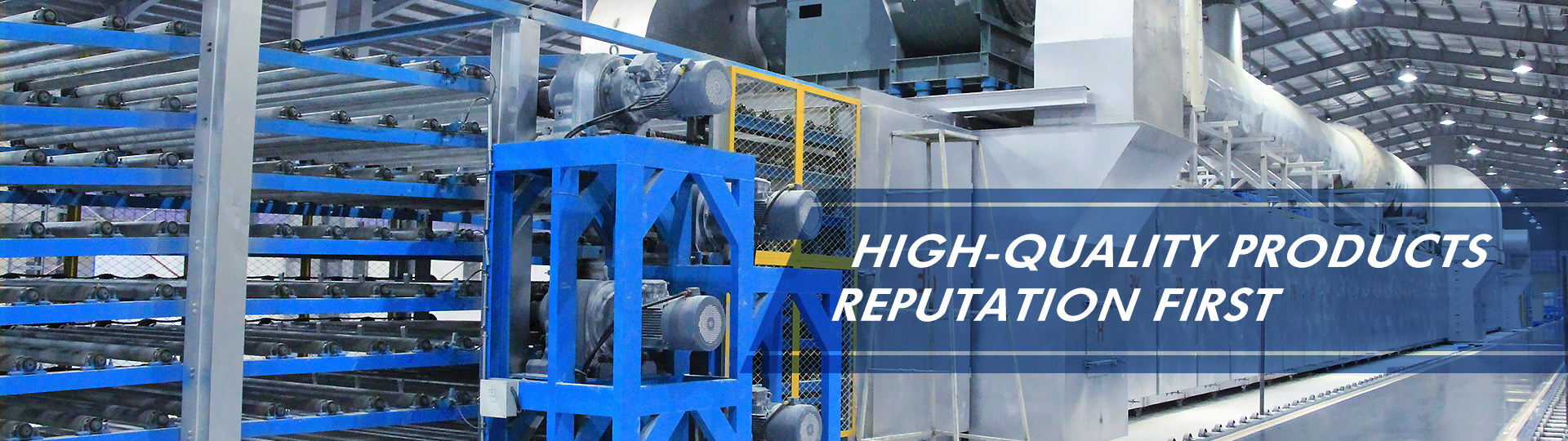
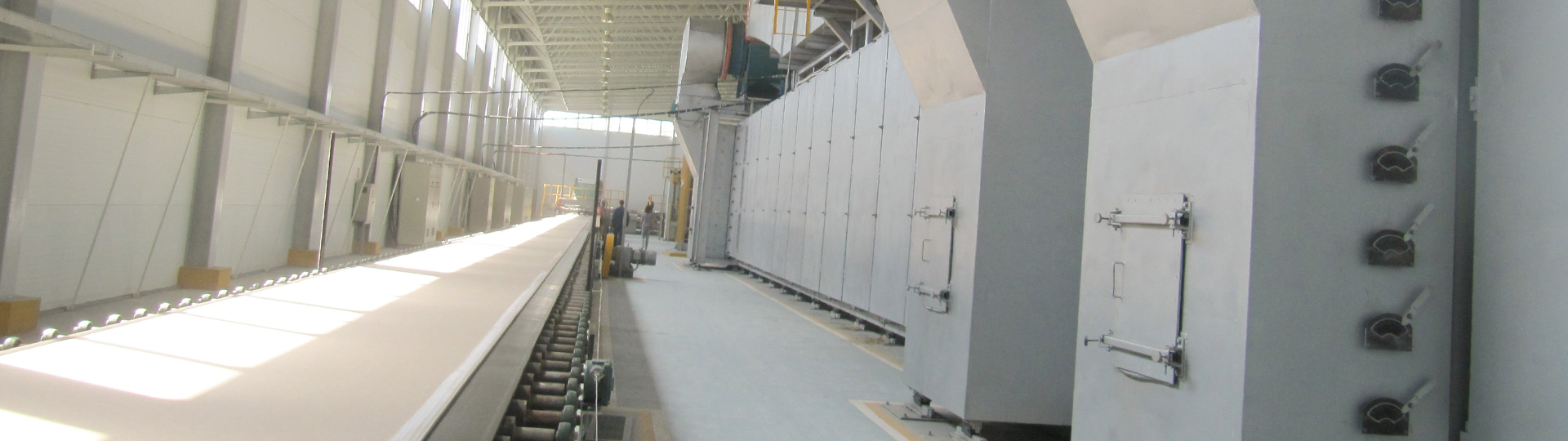
The dryer is the longest continuous section of the line, and at small capacity it is still the piece that sets your building dimensions. It cannot be shortened by reducing output alone: the board has to sit in the dryer long enough to lose its free water, and residence time is a function of deck count and length.
Two practical consequences. First, a 2 million m²/year line with four decks needs a building shorter than a 4 million m²/year line with six decks; published building lengths for this class of line run from about 40 m to 120 m depending on capacity. Second, if you expect the plant to grow, say so before the dryer is manufactured — adding decks after the equipment is built is a redesign, not an upgrade.
The heat source is a direct-combustion hot air stove with the burner mounted inside the air duct, which puts gas efficiency close to 100% and supports compliance in emission-sensitive markets. Fuel can be natural gas, heavy oil, coal or diesel, and the choice is normally made on what is available and economical at your site rather than on equipment cost.
Gypsum board production line cost is not the same as equipment price, and on a line of this size the two differ by a factor of nearly two. The split below is typical, and the items investors most often forget are freight and working capital.
Cost component | Share of total |
Equipment (FOB China) | 50–60% |
Freight and customs | 10–15% |
Building and foundation | 15–20% |
Installation and commissioning | 5–10% |
Working capital (raw material, labour) | 10–15% |
As a published reference, a 2 million m²/year line is quoted at USD 180,000–300,000 FOB China for the equipment. The 4 million m²/year configuration sits above that bracket and is quoted against a confirmed specification rather than from a table, because dryer decks, automation level and the fuel system move the figure more than nominal capacity does.
A small scale plasterboard production line still needs industrial land rather than a workshop bay. Land area is commonly 5,000–10,000 m², and building height 6–8 m to clear the dryer and the material handling above it. The forming and drying sections need a reinforced concrete slab, not a standard industrial floor.
Utilities are the part that most often delays commissioning: stable power, a fuel supply sized for the stove, and water for the mixing and cleaning circuits all have to be in place before the equipment arrives.
A board line consumes calcined gypsum powder, not rock. Small plants face a genuine choice: buy stucco from a local supplier, or install a powder line alongside the board line and calcine your own.
Buying stucco lowers the capital requirement and shortens the build, but leaves the plant exposed to the supplier's price, quality consistency and delivery reliability — and board quality follows stucco quality directly. Calcining on site costs more up front and needs more land and more operators, but fixes both cost and quality inside the plant boundary. If you already own a gypsum quarry, the second route is usually the one worth costing properly before the board line is specified. DCI supplies both the board line and the powder line, so the two can be designed together rather than bolted together afterwards.
The schedule below assumes the site is ready when the equipment arrives. Site readiness, not manufacturing, is what moves these numbers in practice.
Phase | Duration |
Design and engineering | 1–2 months |
Manufacturing | 3–5 months |
Shipping | 1–2 months |
Installation and commissioning | 4–6 months |
The phases overlap: manufacturing starts while foundations are being poured, and shipping is booked against the installation date rather than after the line is complete. Confirmed dates are issued with the quotation for your configuration.
It is worth being clear about the limits before signing. A small gypsum board plant will not serve a national market on its own, and running it well above its rated speed costs reject board faster than it gains output. Board types are also constrained by the additive package rather than by the line: moisture-resistant and fire-resistant board need the corresponding formulation, and a line specified for regular board only will not switch to fire-rated board without changes to mixing and raw material handling.
What the line does guarantee is the product standard. Board from a small line meets GB/T 9775-2008 and equivalent international standards, the same specification as board from a 20 million m²/year plant.
Q: What is the smallest gypsum board production line DCI builds?
A: 2 million m² per year, at 4 m/min with four dryer decks. The next step is 4 million m² per year at 8 m/min with six decks.
Q: How much does a 2 million m²/year line cost?
A: USD 180,000–300,000 FOB China for the equipment. Building, foundation, freight and working capital are additional: with equipment at 50–60% of the total budget, the complete project typically comes to about 1.7–2.0 times the equipment figure.
Q: How much land and building height do I need?
A: Around 5,000–10,000 m² of land and 6–8 m of building height. The dryer is the longest section and is what sets the building footprint — published lengths for this class of line run from about 40 m to 120 m depending on capacity.
Q: Can I upgrade a 2 million m²/year line to 4 million later?
A: The two models differ in line speed and dryer deck count, so the decision belongs in the original specification rather than after commissioning. Tell us your three-year target when the line is configured, and the forming section and dryer are sized for it from the start.
Q: Do I need my own gypsum powder line?
A: Not necessarily, but it changes your exposure. Buying stucco reduces capital and build time while leaving quality and price with the supplier. If you own a quarry, calcining on site is worth costing before the board line is specified.
Q: What board sizes can a small line produce?
A: Thickness 7–20 mm, width 1200 or 1220 mm and length 2400–3600 mm, all adjustable.
Send us your target capacity, block size and available fuel, and our engineering team will return a tailored configuration and quotation. Hengshui Decheng Machinery & Equipment Co., Ltd. (DCI) — Email: dci@chinagypsummachine.com | WhatsApp: +86 13930110827 / +86 18203235588
| www.dcimachine.com
Processing Demand Survey
x